

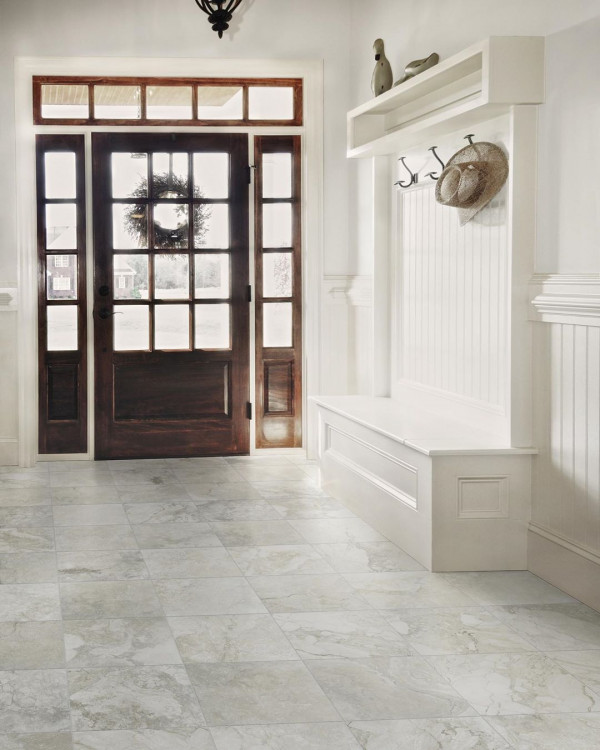
Both natural stone and porcelain tile bring lasting elegance to a home — but they win you over in very different ways. This guide breaks down style, cost, upkeep, and durability so Greater Dayton homeowners can choose with confidence.
When you are weighing premium surfaces, two names rise to the top. Natural stone delivers one-of-a-kind organic variation and an unmistakably upscale feel — no two slabs are ever the same. Porcelain tile, by contrast, is engineered to be remarkably durable and low-maintenance, and today’s designs convincingly mimic stone, wood, and concrete. The right answer depends on how you live, how you decorate, and what you want to spend.
Quick takeaway
Choose natural stone for authentic character, depth, and a premium statement you will feel underfoot. Choose porcelain tile for everyday toughness, easier care, and budget flexibility. Want a softer touch or a lower price point? Luxury vinyl is a comfortable alternative, and glass tile makes a brilliant accent in either design.
Natural stone
- Truly unique veining and movement
- Organic depth and warmth
- High-end, custom look
Porcelain tile
- Consistent, predictable patterns
- Mimics stone, wood, or concrete
- Huge range of sizes and finishes
Natural stone
- Premium material investment
- Pricing varies by stone type
- Strong upscale resale appeal
Porcelain tile
- Friendlier price for big areas
- Wide budget-to-luxury range
- Great value per square foot
Natural stone
- Periodic sealing recommended
- Wipe spills promptly
- More attentive day-to-day care
Porcelain tile
- No sealing of the tile body
- Simple sweep-and-mop routine
- Highly stain resistant
Natural stone
- Hard and long-lasting
- Softer stones can scratch or etch
- Ages with genuine character
Porcelain tile
- Dense and water resistant
- Resists scratches and wear
- Excellent for high-traffic rooms
What makes natural stone different
Natural stone — marble, travertine, slate, limestone, granite — is quarried from the earth, which means every piece carries its own veining, color shifts, and texture. That organic variation is exactly why designers reach for it when they want a space to feel curated rather than catalog-perfect. Lay a stone floor or wall in a Kettering or Centerville home and you get a surface that feels custom because it literally is. Over the years it ages with character, developing a patina that many homeowners treasure, and it tends to telegraph quality to buyers, which can lift the perceived value of a Miami Valley property.
What to keep in mind: stone is a larger upfront investment, and most varieties ask for more attentive care. Porous stones benefit from periodic sealing and prompt cleanup of acidic spills so the finish stays beautiful. If you love the material but want guidance on which stone suits your lifestyle, our team is happy to walk you through the options.
Why porcelain tile is so popular
Porcelain is fired at extremely high temperatures, producing a dense, hard-wearing surface that shrugs off moisture, scratches, and heavy foot traffic. That toughness is why it shows up in busy Dayton and Springfield kitchens, mudrooms, and bathrooms again and again. Maintenance is genuinely easy — a regular sweep and damp mop is usually all it takes, with no sealing of the tile itself required. And thanks to modern printing, porcelain tile offers enormous design flexibility, faithfully imitating marble veining, weathered wood, or smooth concrete in finishes from matte to polished.
Budget tip
Porcelain lets you stretch a renovation dollar without sacrificing style. Splurge on a stone-look porcelain in the rooms guests notice most, then choose simpler tile or a value-friendly product like vinyl in back-of-house spaces to keep the overall project on budget.
Kitchen: Porcelain tile is a crowd favorite here for its stain resistance and easy cleanup around cooking and spills. If you want a true showpiece island wall or backsplash, sealed natural stone delivers a luxe focal point that elevates the whole room.
Bathroom: Both perform well in damp environments. Porcelain is the low-fuss everyday choice for floors and shower surrounds, while stone (properly sealed) brings spa-like warmth and richness to a primary bath.
Entryway: This high-traffic, grit-prone zone rewards toughness. Porcelain handles wet shoes and salt from Ohio winters with ease, and stone makes a grand first impression if you are ready for a little extra care.
Feature space: For a fireplace surround, niche, or accent wall, mix in glass tile for shimmer and color, or let a dramatic slab of natural stone be the star of the room.
Style: organic character vs controlled consistency
This is where the two surfaces part ways philosophically. Natural stone celebrates the unexpected — flowing veins, color drift, and tactile texture that make a space feel rooted and bespoke. Porcelain tile celebrates control — you can order box after box and expect the same look, which makes large open floors and matched rooms come together seamlessly. Neither is “better”; they simply suit different design goals. The static snapshot below shows how each leans across the qualities homeowners care about most.
Natural stone is your match
You want depth, individuality, and that unmistakable premium feel. Explore the range of natural stone options, then visit our Huber Heights showroom to see and touch real samples in person.
Porcelain tile is your match
You value toughness, simple care, and flexible pricing. Browse stylish, hard-working porcelain tile, then stop by our Huber Heights showroom for a hands-on look at finishes and sizes.
How budget factors in
Natural stone typically carries a premium — both for the material and the precision installation it deserves. Porcelain offers far more flexibility, with options that range from value-friendly to genuinely luxurious, so it is easier to scale across a whole house. A smart strategy many Springboro and Tipp City homeowners use: invest in stone or stone-look porcelain where it makes the biggest visual impact, and choose practical, lower-cost products like laminate or vinyl in secondary rooms and back hallways. Spreading the budget this way lets you splurge where it counts without overspending overall.
Maintenance and practicality
Stone wants a little more attention: most varieties should be sealed periodically, and acidic spills like wine or citrus are best wiped up quickly to protect the finish. Porcelain is about as easy as flooring gets — sweep, damp-mop, done — with no tile sealing needed and excellent resistance to stains and moisture. For business settings in Troy or Dayton where durability and low upkeep are non-negotiable, porcelain is often the practical winner; our commercial flooring team can help spec the right product for heavy traffic.
Frequently asked questions
Does porcelain look cheap next to natural stone?
Not anymore. High-quality stone-look porcelain captures veining and texture so convincingly that most people cannot tell at a glance. Stone still has an edge in genuine depth and one-of-a-kind movement, but premium porcelain looks rich and intentional in its own right.
Is natural stone always more expensive than porcelain?
Generally stone carries a premium, but pricing overlaps. Some exotic porcelains cost more than entry-level stone, and some stones are surprisingly affordable. The best move is to compare specific products side by side for your project and rooms.
Which is better for resale value?
Both can boost appeal. Natural stone signals luxury and tends to impress buyers in upper-tier homes, while quality porcelain reads as durable and move-in ready. Choosing materials appropriate to your home and neighborhood matters more than the category alone.
Can I mix warmth with tile?
Absolutely. Pair hard surfaces in entries and wet areas with cozier materials elsewhere — hardwood in living and dining spaces, or soft carpet in bedrooms — for a home that feels both practical and inviting.
Which fits your style and budget?
If you crave authentic, ages-with-grace character and a premium statement, natural stone rewards the investment. If you want enduring toughness, easy care, and pricing you can tailor, porcelain tile is hard to beat — and today it looks the part beautifully. Many homeowners across the Miami Valley land on a blend of both. See why neighbors trust us by reading our customer reviews, then come compare real samples in good light at our Huber Heights showroom at 6029 Taylorsville Rd — just find our location and stop in.
Ready to choose the surface that fits you?
Tell us about your space and budget and we will help you compare natural stone and porcelain side by side. Get started with a no-pressure, free estimate today.


