

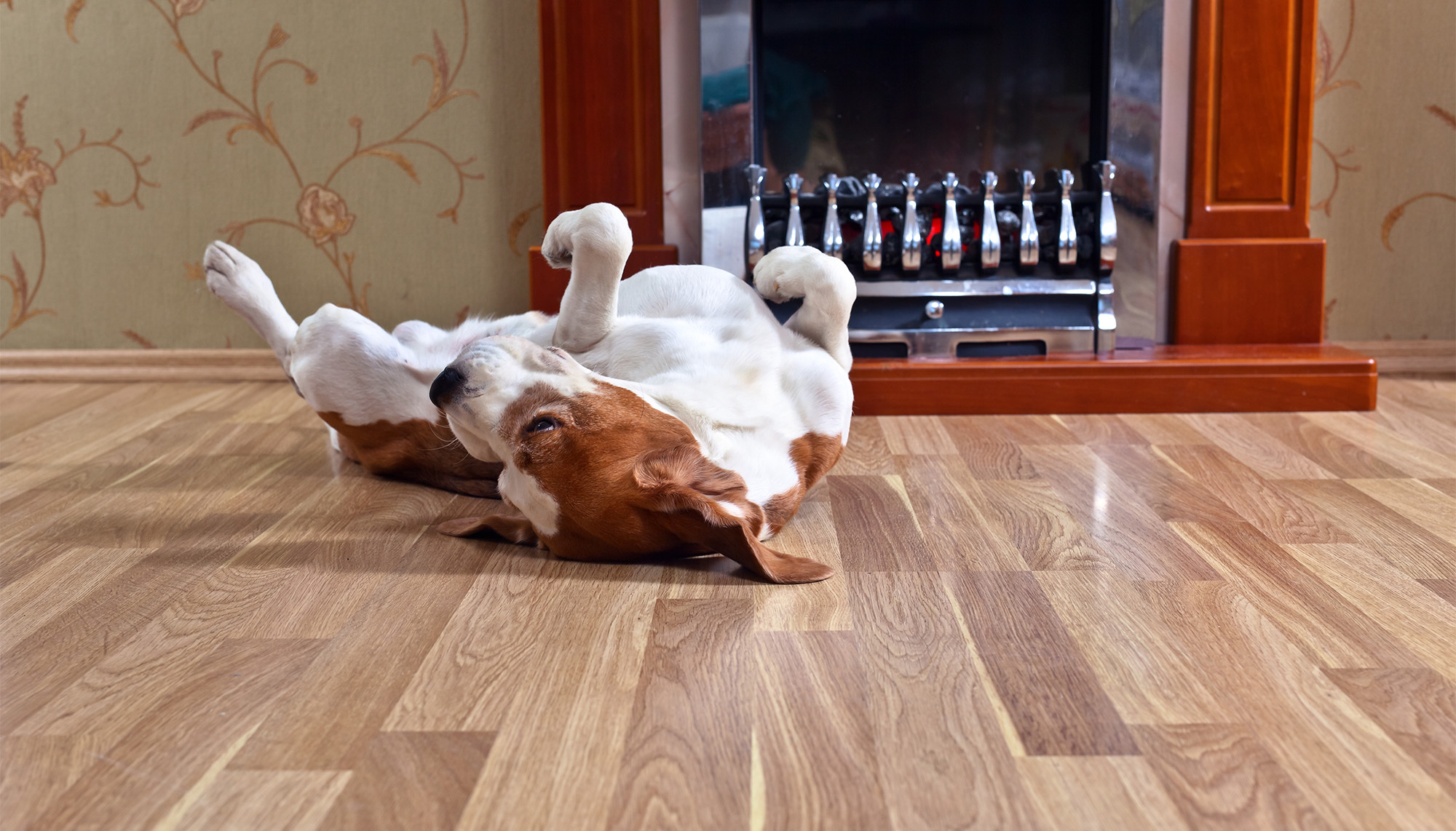
Laminate and luxury vinyl plank (LVP) look almost the same on a showroom floor, but they answer to water differently and they're graded on different scales, which is where most shoppers get tangled up. The short version: for anywhere water is a real risk, like a basement, bathroom or laundry, LVP wins because it's waterproof all the way through, while laminate is the better pick in a dry room where you want a harder, more wood-like surface and often a lower price. The part that trips people up is trying to compare the two floors' durability numbers directly, and you can't, because they measure different things. Here is how the two actually differ and which one belongs in each room.
What's Actually Under the Surface: HDF vs. Rigid Core
The real difference between laminate and LVP is the core, the thick middle layer that gives each plank its character. Laminate is built on a high-density fiberboard (HDF) core, a dense wood-fiber board, and that wood-based center is why laminate feels firm and warm like real wood, and also why it swells if water gets into a seam and sits there. Luxury vinyl plank, in its common rigid form, is built on a stone-plastic composite (SPC) core, a plastic-and-mineral center that shrugs off water completely because there's no wood in it to swell. Everything else people argue about, from water resistance to feel to cost, traces back to those two cores. Get the core right for the room and the rest of the decision gets easy.
Water: The Real Dividing Line
Water is where laminate and vinyl genuinely part ways, and it's the first question to settle. LVP is waterproof through the whole plank, surface and core, so it takes standing water, a burst supply line, or a mopped basement floor without swelling. Laminate is water-resistant on top, where the surface layer sheds a wiped-up spill, but its HDF core will swell and lift if water works into a seam and stays there. In plain terms, LVP is the safe pick for a basement, bathroom, laundry or mudroom, while laminate belongs in rooms that stay dry. That's the whole reason our luxury vinyl goes below grade and into wet rooms while laminate stays upstairs. Both shed a quick spill. Only one survives a flood.
Why You Can't Compare an AC Rating to a Wear Layer
The most common mistake shoppers make is trying to compare laminate's durability number to vinyl's, and the two measure different things on different scales. Laminate is rated by its AC rating, an abrasion-resistance scale from the European EN 13329 standard that runs from AC1 up to AC6, with AC3 the usual floor for a busy home and AC4 or higher for heavy traffic. Vinyl is rated by the thickness of its wear layer in mils (a mil is a thousandth of an inch), where 6 to 12 mil is residential and 20 mil or more is commercial. One number describes how well a surface resists scuffing, and the other describes how much clear top coat sits over the printed design, so lining up an AC4 against a 20-mil wear layer compares two unrelated things. Read each floor on its own scale: a mid-to-high AC rating for laminate, and a wear layer of at least 12 mil for a busy residential vinyl. In North America you can also look for the plank's NALFA certification, which the North American Laminate Flooring Association awards under its LF-01 standard after sorting laminate into four use levels across 14 separate tests, and the laminate we carry comes from lines that hold up under it.
Scratches, Dents, and Feel Underfoot
On the things you notice day to day, laminate and vinyl trade wins. Laminate's hard surface resists scratches and scuffs better, so it's the tougher pick against dog claws and dragged chairs, and its firm HDF core feels more like real wood underfoot. Vinyl's softer surface dents more easily under a heavy point load like a refrigerator leg, but it resists stains well, feels warmer and quieter to walk on, and is more forgiving over a slightly uneven subfloor. Neither one is fragile. They just fail in different ways, so the right pick depends on whether your household is harder on a floor with grit and claws or with water and heavy furniture.
What Do Laminate and LVP Cost?
As raw materials, laminate and vinyl are close in price, with one 2026 comparison putting laminate near $2.99 and a comparable rigid vinyl near $3.75 per square foot. Installed is the number that matters, and there laminate is usually the cheaper of the two, while luxury vinyl plank commonly runs about $4 to $16 per square foot installed, with most homeowners landing around $5 to $12 once labor and prep are counted. That installed range breaks down to roughly $2 to $10 per square foot for the vinyl itself and about $2 to $6 for labor. Both are floating, click-together floors, which keeps labor lower than glue-down or nail-down options. A quality version of either should last 15 to 25 years in a home, so the real cost question is which one fits the room without needing an early replacement.
Laminate vs. LVP at a Glance
| Factor | Laminate | Luxury Vinyl Plank |
|---|---|---|
| Core | High-density fiberboard (wood) | Rigid stone-plastic composite |
| Water | Water-resistant surface; core swells if soaked | Waterproof surface and core |
| Durability rating | AC rating, AC1 to AC6 | Wear layer in mils, 6 to 20 and up |
| Scratch vs dent | Better scratch resistance | Better dent and stain resistance |
| Feel | Firmer, warmer, wood-like | Softer and quieter underfoot |
| Best rooms | Dry rooms: bedrooms, living areas | Wet or below grade: baths, basements |
Which One Should Go in Your Room?
The room decides more than the brand does, so match the floor to what the space throws at it. For a basement, bathroom, laundry or mudroom, choose LVP for its waterproof core and stop worrying about spills. For a bedroom, living room, dining room or home office that stays dry, laminate gives you a harder, more wood-like floor, often for less money. Kitchens can go either way: LVP if you want zero water anxiety, laminate if you want the firmest, most wood-like feel and you stay on top of spills. When you're torn between them, the easiest tiebreaker is to bring samples of both to your home and stand on them in the real light and traffic of the room.
Questions We Get About Laminate and LVP
Is LVP better than laminate?
Neither one is better across the board, because each wins in different rooms. LVP is the better floor anywhere water is a risk, since its core is waterproof, while laminate is the better floor in a dry room where you want a harder, more wood-like surface and often a lower installed price. The useful question is which one fits the room you're flooring.
Can you put LVP or laminate in a bathroom?
LVP is a great bathroom floor because it's waterproof through the core and handles the splashes and humidity a bathroom throws at it. Laminate is riskier in a full bathroom, since standing water at a seam can swell the core, though a water-resistant laminate can work in a powder room that sees only light use. If the bathroom has a tub or shower in daily use, LVP is the safer call.
Does laminate or vinyl add more home value?
Both laminate and LVP read to buyers as clean, updated, low-maintenance floors, and neither one looks like a downgrade the way worn carpet can. LVP tends to carry a slight edge in listings right now because waterproof is an easy selling point, especially in basements and baths. In a dry, upstairs room, a good laminate that looks like real wood competes just fine. Condition and a consistent look through the house matter more to resale than which of the two you pick.
Which is easier to install yourself?
Both laminate and LVP use click-together floating systems designed for DIY, so they're among the easier floors to put in yourself. Rigid LVP is a little more forgiving over a slightly uneven subfloor, while laminate wants a flatter base to keep the joints from separating. Either way, the subfloor prep is where do-it-yourself jobs go wrong, and it's the part worth getting a professional eye on before you start.
Choosing Between Laminate and LVP
The choice between laminate and LVP comes down to water first, then feel and budget: LVP where moisture is a risk, laminate where the room stays dry and you want a harder, wood-like floor for less. Bring the rooms and how they get used, and we'll match each one to the right floor instead of pushing a single answer for the whole house. When you're ready to see real options and real numbers, request a free estimate and we'll measure, check the subfloor, and lay both choices side by side.


