

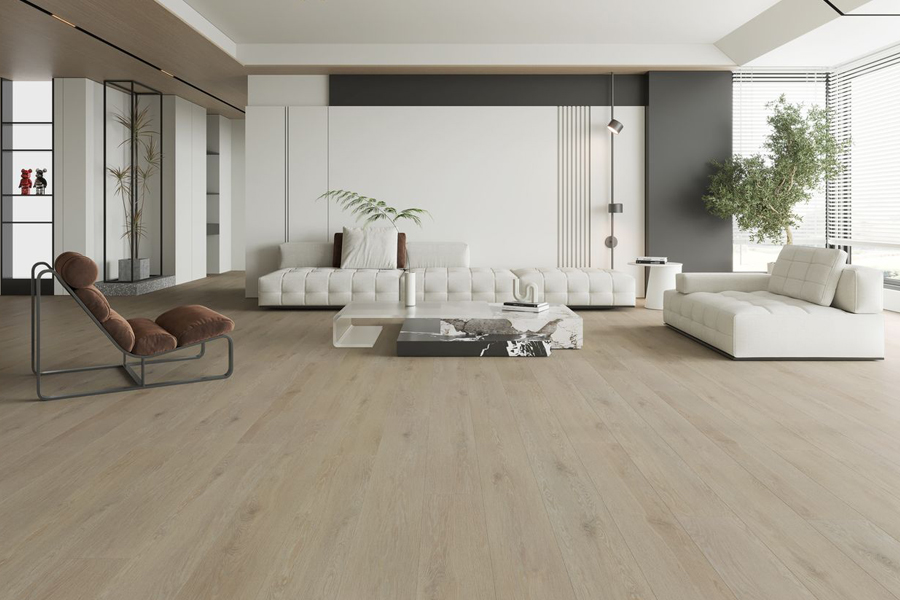
If you’ve ever walked across your laminate floors in February and then again in August and thought, “Huh, they feel a little different,” you’re not imagining it. In our four-season Ohio climate, your home quietly expands and contracts all year long—and your laminate goes along for the ride. Understanding that seasonal movement makes it a lot easier to keep everything looking smooth and gap-free.
Why laminate moves with the seasons
Laminate looks like wood, but underneath the photo layer there’s a core made from compressed wood fibers. That core behaves a lot like real wood: it reacts to moisture in the air.
- When indoor air is humid (think sticky July afternoons), those fibers absorb a bit of moisture and swell.
- When the air gets dry (furnace season, anyone?), the fibers release moisture and shrink.
The movement is small, but it adds up across a room. That’s why professional installation always includes a gap around the walls and fixed objects, so the planks can expand and contract without buckling. If you’re comparing options before a remodel, you can see how different cores, thicknesses, and locking systems are built by browsing our laminate flooring choices.
What Ohio’s seasons really do to your laminate
Around here, we cycle from humid summers to dry, heated winters, with spring and fall bouncing between the two. That constant swing in humidity is what your floors are feeling.
In summer, you might notice:
- Slight “peaking” at plank edges if the boards were installed too tight to the walls.
- Doors that feel a bit snug as the surrounding trim and flooring swell together.
- A faintly softer, quieter feel underfoot as the locking joints are under more pressure.
In the winter, the opposite happens:
- Tiny gaps may appear between boards as they contract.
- The floor can sound a little more “clicky” or hollow because joints aren’t under as much tension.
- If the air gets extremely dry, edges may feel slightly sharper to the touch.
Most of this is normal. The red flag is permanent change: boards that stay cupped, edges that remain raised, or gaps that don’t close back up when the weather shifts. That usually points to moisture problems under the floor, not just seasonal movement.
Simple ways to protect laminate from humidity swings
You don’t have to babysit your floors, but a few habits go a long way in a Midwestern home—especially in basements and first floors over concrete.
First, try to keep your indoor humidity roughly in the 35–55% range:
- In winter, a whole-house humidifier or a portable unit in the main living area can keep the air from getting bone-dry.
- In summer, air conditioning plus a dehumidifier in problem areas (like a finished basement) helps prevent swelling.
Second, treat water like the enemy of laminate:
- Wipe up spills quickly so moisture doesn’t seep into joints.
- Use mats at entry doors where snow, rain, and road salt come in on shoes.
- In below-grade spaces, a proper underlayment and moisture barrier under the planks matter just as much as the product itself.
If you’re still planning your project and are worried about moisture—especially in a basement or laundry—some homeowners mix materials and use laminate in dry areas, then turn to resilient options from our sheet vinyl collection where standing water is more likely.
Installation and product choices that reduce seasonal issues
The way laminate is installed has a huge impact on how it handles humidity over time. A floating floor needs:
- The right expansion gap at all walls and around kitchen islands and stair posts.
- Trim and transitions that allow the floor to move underneath without being pinned.
- A flat, properly prepped subfloor so joints aren’t stressed unevenly.
That’s where an experienced crew makes a difference. Our installers work with laminate every day, along with other materials like natural stone and tile, so we’re constantly balancing looks with how each product will behave in a real Ohio home. If you’re still gathering ideas, you can see how different materials look in finished rooms by flipping through our flooring inspiration gallery, then narrow things down from there.
Finishing a basement, planning a whole-house update, or replacing water-damaged flooring after a leak? Situations like that are where humidity control, subfloor repair, and product selection all need to line up. Our team handles everything from everyday remodels to larger restoration and commercial projects, which you can explore in our overview of flooring services if you’re curious what’s possible.
If you’re noticing gaps, buckling, or just want help choosing laminate that will handle our local climate, we’re happy to take a look and talk through options with you. You can schedule a visit or shop-at-home appointment by requesting a free flooring estimate, and we’ll help you plan a floor that looks great in every season.


